1. Architectural Theories of the environment: Posthuman Territory

    December 7, 2012
    by Reba Maybury

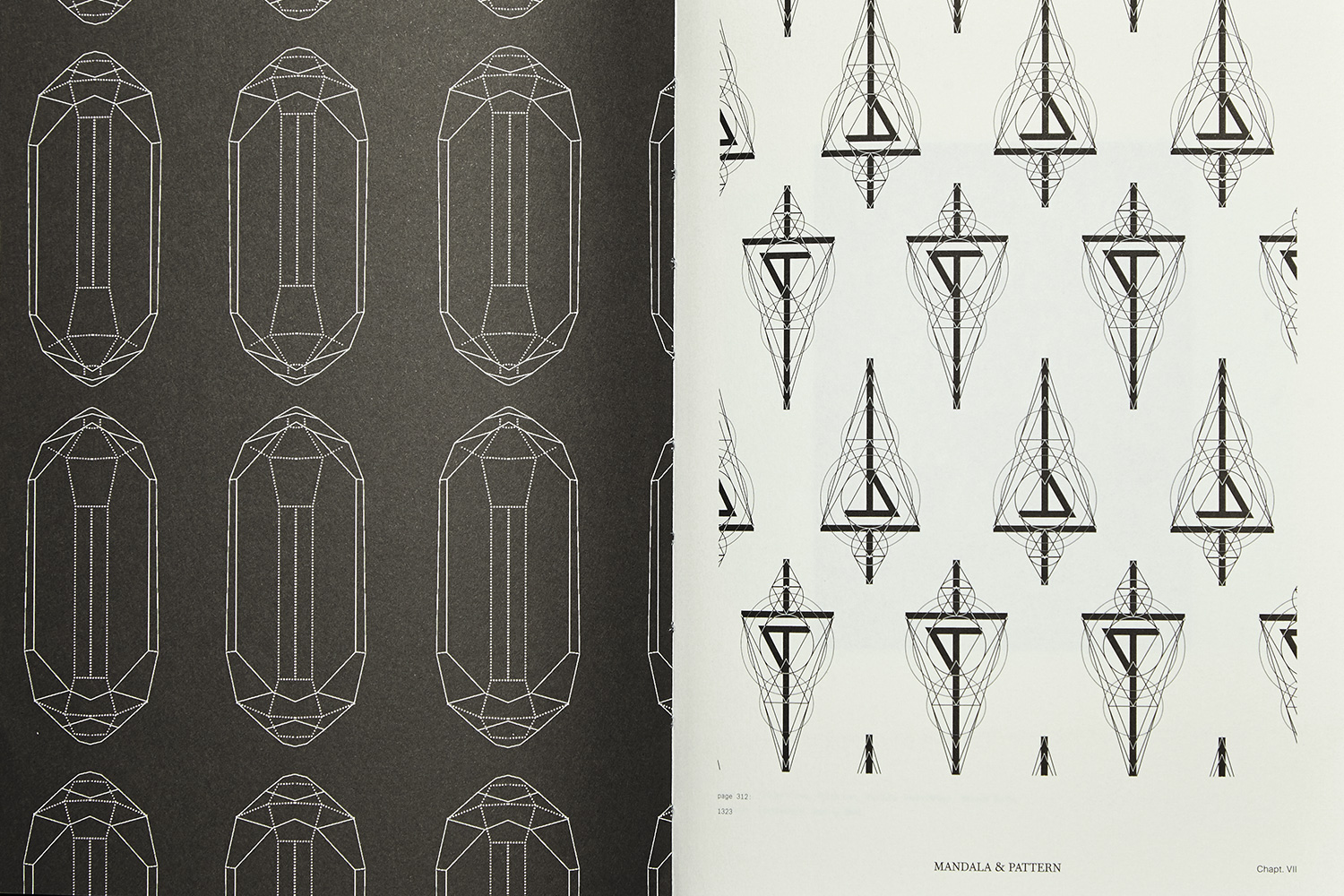
    Architectural Theories of the environment: Posthuman Territory is the brand new book edited by Sang Bleu friend and future collaborator Ariane Louise Harrison. Through a collection of essays about  architects, theorists, and sustainable designers the book provides a framework for a posthuman understanding of the design environment. Harrison explains and shows examples of how as designers and architects, we struggle to reconcile our ever increasing environmental, humanitarian, and technological demands placed on our projects.

    Nine fully illustrated case studies of buildings from around the globe demonstrate how issues raised in posthuman theory provide rich terrain for contemporary architecture, making theory concrete. By assembling a range of voices across different fields, from urban geography to critical theory to design practitioners, this anthology offers a resource for design professionals, educators, and students seeking to grapple the ecological mandate of our current period.

    Case studies include work by Arakawa and Gins, Arons en Gelauff, Casagrande, The Living, Minifie van Schaik, R & Sie (n), SCAPE, Studio Gang, and xDesign.

    Essayists include Gilles Clément, Matthew Gandy, Francesco Gonzáles de Canales, Elizabeth Grosz, Simon Guy, Seth Harrison, N. Katherine Hayles, Ursula Heise, Catherine Ingraham, Bruno Latour, William J. Mitchell, Matteo Pasquinelli, Erik Swyngedouw, Sarah Whatmore, Jennifer Wolch, Cary Wolfe, and Albena Yaneva

    Buy the book here on Routlegde or on Amazon


  2. Patent Drawings for Voting Machines

    November 14, 2012
    by Reba Maybury

    via Jennifer Teets

    1873:

    1889:

    1936:

    And more here!


  3. Trading Style – Carri Munden

    November 12, 2012
    by Reba Maybury

    Read more here about Carri Munden’s (aka Cassetteplaya) new show ‘Trading Style’ at the Weltkulture Museum in Frankfurt here!

    “TRADING STYLE – WELTMODE IM DIALOG”

    What does fashion tell us about society? How do styles travel and mediate identity?

    In an unprecedented dialogue between past and present worlds of fashion, “TRADING STYLE” presents over 500 historic objects, photographs and films from the Weltkulturen Museum’s collection together with new designs for clothing and accessories by four international fashion labels: Buki Akib(NG), A Kind of Guise (DE), CassettePlaya (UK) and P.A.M./Perks and Mini (AU).

    Working in residence at the museum’s lab during 2012, each team of designers investigated the ethnographic collections and created new prototype garments inspired by their selection. With artefacts from Angola, Australia, Bolivia, Brazil, Cameroon, China, the Democratic Republic of Congo, Ethiopia, Germany, Greenland, Guinea-Bissau, Indonesia, Iran, Ivory Coast, Liberia, Malawi, Mali, Mexico, Micronesia, Namibia, New Guinea, New Zealand, Nigeria, Panama, Peru, the Philippines, Samoa, the Solomon Islands, Somalia, South Africa, Sudan, Tanzania, Thailand, Tierra del Fuego, Togo, Uganda, the United States and Venezuela.

    Art director: Teimaz Shahverdi. Museum Director: Clementine Deliss

    Produced in cooperation with Theatrum Mundi / Global Street(theatrum-mundi.org)

    image: Face painted Witchdoctors South Africa x Kadeem + Kyrone Oak in Cassette Playa Ldn. 


  4. “My tennis game is in complete disrepair. I like to wear a white Lacoste shirt or Fred Perry.”

    by Jeanne-Salome Rochat

    Sang Bleu contributor Mr. David Coggins talks about the state of tennis style on tennisdigital.com.


  5. In The Gutter

    October 23, 2012
    by Reba Maybury

    A few days ago I found this exceptional book in the library. I was initially drawn to the cover and back image but after flicking through it, it threw out a some fantastic surprises. Written by a Fleet Street journalist during the hey day of Punk in Britain in 1978, Hennesy naively (and quiet honestly offensively) tries to compare the adornments of the punk style to tribal body modifications. These base comparisons are shown quite graphically side by side on most pages by having on one page a London punk being suitably insulting and on the other page a person from Africa, Asia or South America (i.e pretty much the entire world) wearing a vaguely similar nose ring or make-up, behaving in a very normal way. Although the book is beyond being dated, it’s layout is really rather attractive and the utter fear the journalist radiates out of the book in its comparisons reminds the reader of how terrified people really were of punk at the time. Other than the patronising content on behalf of both the punks and the people of the world exhibited in the book, it does have some great documentation of young punks which can be seen here.


  6. Blemmyae / Anthropophagi

    October 12, 2012
    by Admin

    And of the Cannibals that each other eat,
    The Anthropophagi and men whose heads
     Do grow beneath their shoulders.

    Othello Act 1, Scene 3

    In Act 1 of Shakespeare’s Othello, reference is made to a strange race of people, who were said to grow heads inverted into their bodies; and thus possessing faces in their chests. Due to the structuring of the passage in question (lines 134-135), the race in question is often credited as the Anthropophagi (literally meaning, “human-eaters”), who were infact a completely separate mythical race of cannibals.

    The race being described were known as Blemmyes or Blemmyae; an acephalous race, spoken about by  Herodotus, Sir Walter Raleigh and Pliny the Elder (taking the latters’ known ability to distort the truth, makes his records somewhat questionable…)

    There are some rather confusing elements, in that firstly the Blemmyes were not only a quasi-fictitious group of head-less beings, but also an actual real tribe (of normal humans), who resided in Nubia. As well as this, the quasi-fictious headless Blemmyes are described as being cannibals themselves and often referenced as ‘Anthropophagi’, so all in all the two races in question are tied in within documented and historical references indefinitely.

    Illustration of Blemmyes from a German edition of Sir Walter Raleigh’s “Discovery of Guiana”