1. How can a tattoo be seen as a work of art?

    October 19, 2012
    by Reba Maybury

    Read Dominic Johnson’s great article from The Independent where he has questioned how tattooing can be used as an art form.

    In late October, the tattooist Alex Binnie will create the second of two tattoos upon the skin of my hands, in a live performance called Departure (An Experiment in Human Salvage). We’ll be accompanied by three guest artists, whose performances will complement – and perhaps complicate – the attempt to shed new light on the status of tattooing as a practice on the contested border between fine art, folk art, or craft.

    How can the procedures of tattooing – the painful depositing of layers of inks below the surface of the skin – be reframed as performance? How can a tattoo be seen as a work of art? The use of tattooing in performance relates to a broader use of body modification techniques in visual art – usually painful acts such as piercing and scarification – most notably in the work of London-based artists Ron Athey, Franko B, or Kira O’Reilly.

    While such work is sometimes misread as a symptom of the artist’s masochism, the pain involved is somewhat incidental to the production of a lasting image: as a spectacle that has a lasting effect on its audiences, but also in the sense of a permanent trace on the skin of the artist. Tattooing takes its place alongside other similar techniques for puncturing, cutting, or otherwise marking the skin towards the production of strong imagery in art and performance.

    Commercial tattooing has undergone a boom in popularity over recent years, with the number of tattoo studios in Great Britain reportedly doubling in the last three years. This may suggest an increase in the acceptability and visibility of tattooing, partly due to the distancing of custom tattooing from their somewhat archaic association with sailors, soldiers, criminals, hookers, and other supposed ne’er-do-wells, and also partly thanks to the growing prevalence of tattoos on the bodies of celebrities.

    However, the use of tattooing in or as performance is less familiar, but draws on an older, rich tradition of exhibition and display of tattooed persons in European culture. These include: the little-known figure of Jean Baptiste Cabris, a French sailor who exhibited his heavily tattooed body around Europe at the turn of the eighteenth century, after being tattooed in the Marquesas. Or ‘the Great White Chief’ John Rutherford, an Englishman who was exhibited as a ‘living specimen’ in aristocratic circles in the 1820s and 1830s, after supposedly being captured and forcibly tattooed in New Zealand. These histories of exhibition and display inspired me to develop a performance that put the experience of tattooing centre-stage, as it were, by privileging the live action of permanent mark-making, and the piece was first shown at Fierce Festival in Birmingham in March 2011.

    The framing of tattooing as the defining technique of an art practice has more immediate precedents, and constitutes a small subcultural history of visual culture. Indeed, the art historian Matt Lodder recently discussed some art works involving tattooing, reading them in terms of the ways they articulate the theme of affiliation and social bonds in interesting ways. He mentions an infamous performance by Santiago Sierra – 160cm Line Tattooed on Four People (2000) – in which the artist commissioned a tattooist to draw a permanent line across the backs of four participants. Sierra’s piece provokes serious and unresolvable ethical questions, and indeed this may be the key achievement of his practice (Claire Bishop argues as much in her recent book on participatory art, Artificial Hells). Other artists have appropriated tattooing in performance towards more ethically agreeable ends, in powerful and visually striking works.

    Over a series of performance-installations, Sandra Ann Vita Minchin has commissioned a tattooist to recreate a painting by the seventeenth-century Dutch artist Jan Van Davidz de Heem. The resulting image – which took 120 hours to create – is a massive permanent image of the painting across her back. The theme of permanence is key to the work. The work’s title, Ars Longa, Vita Brevis (‘Art is Long, Life is Short’), reminds us of the odd status of the tattoo as a living artwork, whose permanence conflicts with the ephemerality of performance.

    The images created in tattooing may well seem disconcertingly permanent – which provokes anxiety and hand-wringing among commentators – although its volatile permanence is generally limited to the life of the wearer, which is often shorter than that of conventional drawings and paintings (a problem Minchin has overcome by arranging for her skin to be preserved after her death). If the prospect of archiving skin seems macabre, it’s worth acknowledging that similar preserved tattooed canvases are available for viewing at medical museums, such as St Bartholomews Pathology Museum at Queen Mary, University of London, and the Wellcome Collection.

    In another striking series of performances, Mary Coble has had her whole body tattooed –without ink – using tattooing as the basis for a provocative feat of physical endurance. In Note to Self (2005), Coble collected information about homophobic attacks, and had the name of the victim and the location of her or his assault tattooed in a monstrous list across the back of her body, from her neck down to her legs. Coble intimates the physical hardship of a minority under continual attack, and she uses the controlled violence of tattooing to memorialise the suffering of others.

    In the second performance, Blood Script (2008), tattooing acts a metaphor for psychic endurance. She amassed an archive of words used in verbal assaults, and had them tattooed, verbatim, on the front of her body, in a large and bold gothic script. Tattooing without ink produces a crisp bloody line, and the marks fade with time to leave subtle scarring. However, as with all scars, Coble’s flare up in coming months and years, reddening under heat or cold (she tells me that the word ‘Bitch’ often emerges in a hot shower). I see this as a perfect metaphor for the experience of verbal assault, where the insult might leave a meagre (metaphorical) wound, but its aftereffects return to haunt the victim when one might least expect it to.

    In these and other examples, tattooing suggests a novel means of expanding the repertoire of artistic tools of the trade. These developments will make some audiences feel squeamish. Such discomfort should not suggest that artists are out to shock, or out to impress. Rather, the concomitant emotional or physiological reflexes – the flinch, the shiver, the grimace – are some of the potential feelings that might usefully take their place among an expanded range of sympathetic responses to the use of new techniques in art and performance.

    Don’t forget!‘SACREDat Chelsea Theatre starts on 19 October 2012, Dominic Johnson’s ‘Departure (An Experiment In Human Salvage)’ is on Thursday 25 October 2012. For more information visit www.chelseatheatre.org.uk


  2. FUZI UV TPK EXHIBITION AND LIVE TATTOO SESSION at Salon Renate, Berlin

    August 12, 2012
    by Jeanne-Salome Rochat

    SAVE THE DATE: FUZI UVTPK in ZUERICH on AUGUST 24-25!!! Details here.

    All pictures below by Maxime Ballesteros.


  3. They’re not Tattoos, they are skin illustrations!

    August 9, 2012
    by Reba Maybury


    Stills from the Trailer of the legendary 1969 film, The Illustrated Man


  4. YUHZIMIMILIEUFUZIUVTPKETC

    August 6, 2012
    by Jeanne-Salome Rochat

    WE’RE COOKING SOMETHING WITH YUHZIMI & MILIEU, AND THIS GUY (among others).


  5. Myoshka: An Interview

    April 17, 2012
    by Admin

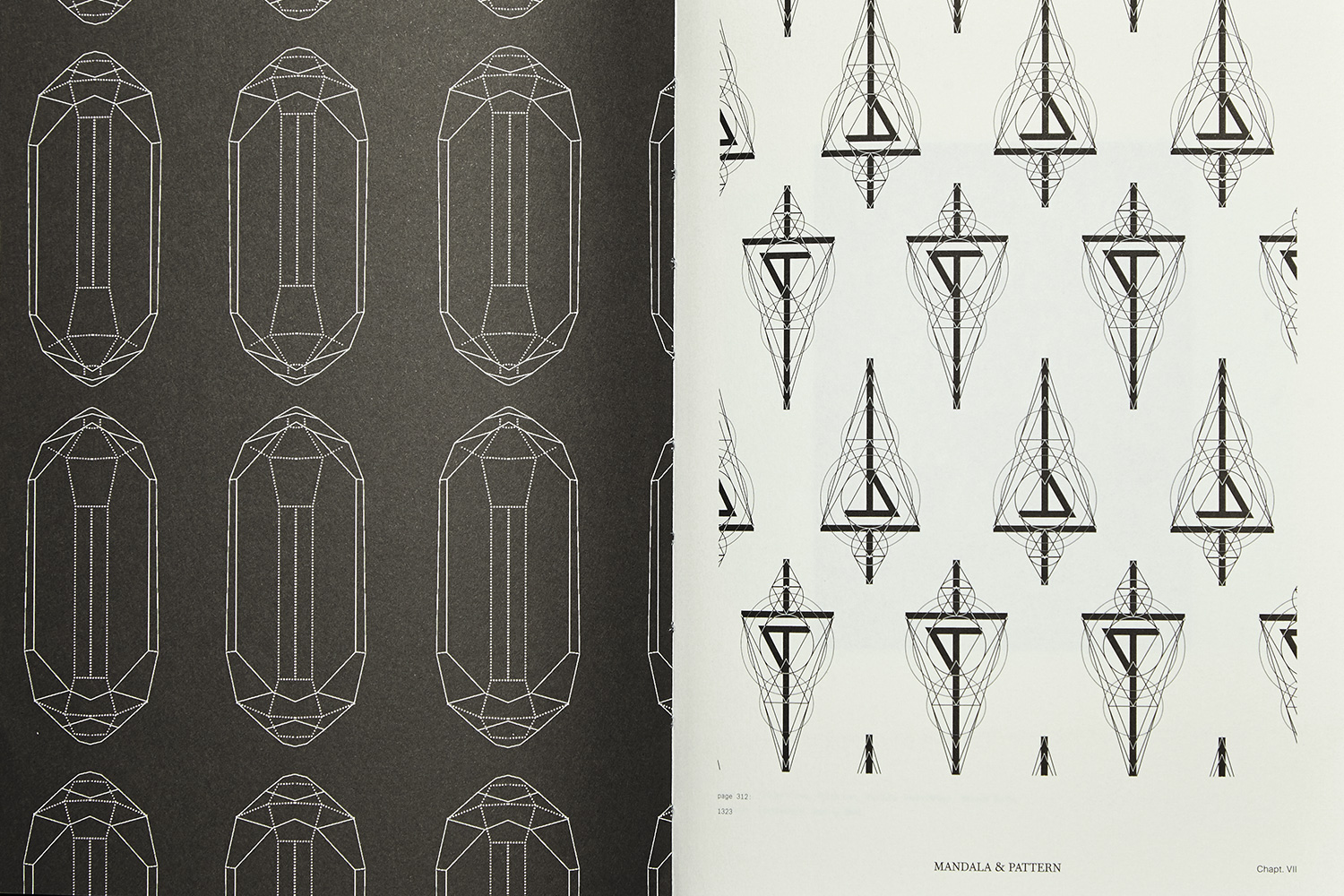
    The Enigma of  Myoshka, is as equally revered as he is renowned within both the tattoo and art world alike. Inspiring a generation of practitioners, as well as collaborating with the likes of Thomas Hooper, Tomas Tomas and Xed Le Head, he has earned his name as a Geometrical genius: capable of  boggling the mind and altering planes of vision through tesselative drawings, designs and Gif Files. Hundreds of dedicated followers of his complex style  have shown permanent appreciation through both tattooing and scarring alike, allowing this realm of adornment to constantly have its boundaries tested and pushed forwards. 


    SB: How would you define Myoshka?

    M: Myoshka is me now. It started off when I was designing stuff and there was a collective of us working. The name was created then with a creative partner of mine at the time. It came from the word Matryoshka; so it was taking about ideas from ideas and a combination of things making the complete entity. Post rationale, I liked it because it was Japanese (laughs). I’ve gone through various transitions from working as an art director, to working as a designer to then doing some freelancing. I’ve been doing advertising for 15 years, but that’s what taught me all the stuff which means I can do the art. At times there’s a little bit of hidden meaning in my work but other times is simply for aesthetic.  At the moment, for me Myoshka is the Geometry. I never use my real name; not sure what that says about me. People don’t really know what I am or what I do: I like that.


    SB: So how did you discover Geometry? Was it through your day job, or through the likes of tattooing?

    M: I actually discovered it through Tomas; I knew about Geometry and had been designing before, but not in those ways. As soon as I saw his work, I was just drawn to it. There was just an energy between us and we started sharing stuff. It wasn’t a case of him sitting me down and telling me how to do things, it more me doing it on my own and then us catching up. The blog(s) started and we starting sharing things through that. He’s still a big inspiration for me now. Through that I met Xed and it really opened up for me.


    SB: Would you say your life revolves around your art?

    M: Yeah!  If I’m not doing my day job, I’m doing this stuff: that’s how the Maharishi thing has come about. I’ve met some nice people along the way, like the blog said. A lot of them I’m proud to call friends; I wouldn’t have met Xed if it wasn’t for that, Matt Black… Jondix, even Thomas Hooper. Even though we haven’t met in person, I still feel as if we’re part of the same family. Tattooing is one of those things where it works in a similar way that I do in that it isn’t a job, its the tattooer’s life. So I’ve kind of drawn parallels in that respect.


    SB: So what is the creative process like in constructing such complex patterns?

    M: It can be any number of ways of working. Sometimes I see old patterns I like that I want to recreate, learn from and then create something new from that. Other times….it depends what mood I’m in. All of the patterns already exist in so many different ways, I just connect the dots. Some nights I’ll work and get nothing done. Other nights, I’ll just keep going or I’ll start something and 6 months later or 8 months later I’ll open that file again and I can see what it was, or what I was starting to get at.


    SB: How far back does Tattooing go, within your life?

    M: I think my earliest memory of tattoos was when I used to swim in my early teens: I used to train a lot. Every Friday we used to have to share the pool with the public, and there was this old boy and he would come with his full bodysuit and I just thought it was incredible. I thought the concept of it was amazing- Old School, sailor style tattoos- very, very heavy work. After that, it was when I was swimming for the England team, and was ill. They didn’t want me to infect the rest of the team so I had to sit on my own on the plane back to England. This guy turned up; tattoo artist and really crazy character. He was covered; I think they both planted the seed in my mind…


    SB: Lets talk about the work you have on your arms; are some of them your own patterns?

    M: I couldn’t be as so bold to suggest so (laughs). Its all geometry that already exists; its mainly a mix of Islamic and Japanese work. I got my first tattoo when I was around 15/16; Japanese Kanji, so I stuck with a theme there. Then I got this fella here, from the Soloman Islands… I think they were a few years apart…


    SB: Interesting evolution; did Tomas (Tomas) do all of the more recent work?

    M: Yeah Tomas has done most of the dotwork; we’re working on my front at the moment, which is one of my designs. Tomas and I learnt a lot during it; I’m still interested in the way that Tattooing works and is applied to the body, and so I can understand more what is achievable to the skin via my patterns; still working in 3-D. I know I have my fun on Photoshop, but applying to skin is not simple in any way. When we started it was a case of saying that we can get this pattern just to wrap, but once I started understanding that the arm isn’t completely cylindrical, then I began to fully understand the complexities. Xed and Tomas are the masters who are cracking this sort of stuff; they’re masters and they’ve dedicated their lives to it.


    SB: With this style of tattooing as well as tattooing in general gaining such a larger social awareness, are you happy to see such a progression?

    M: Yes; I mean tattooing for me is a very personal thing anyway but I think that its good overall that  its growing: its another art form. But me being me, if everyone was getting tattooed I’m not sure if I would be so attracted to it . It still has a very different reaction socially, depending on where you are.  Rarely do I leave the city, so I don’t get such negative reactions. If I was to go back to Singapore, where my mums from I know her family would have a very different view and it wouldn’t be as acceptable.


    SB: I’m always interested when people dedicate their whole body to a specific style. For instance those who have full Geometric bodysuits, but have no attraction to figurative tattoos, script etc. How was it in your case particularly? 

    M: For me, this was the work I was attracted to and it’s about the relationship between me and the artist. It’s the art that spoke to me. I remember going through the flash book for my second tattoo, and then bang!- this one from the Soloman Islands hit me; it spoke to me and that’s what I ended up getting, but I had no idea what it was or what it meant. Years later in Amsterdam, a guy in an art shop, fully tattooed, asked me if I knew where my tattoo came from. When I said no, he scurried out the back of the shop and he came back with a big book and said to me that it was what the ancestors used to carve into the paddles, from the Solomon Islands- which was weird for me as my Granddad was from there. I did my selections differently in the beginning, but I changed how I approached tattooing as time went on. For my back I just said to Tas I wanted a dragon, and just let him rip. With Tomas with the last couple of pieces, we’ve been working more collaboratively and we’re learning along the way which is good fun.


    SB: Seems like a great co-existence of styles.  I came across one of Iestyn (Flye’s) latest clients who had one of your designs scarred on his face; what was it like to see your work like that?  

    M: The pattern that got cut into that guys face’ is one I’ve loved for ages, but never been able to get it right and then suddenly a few month ago I opened up the file again and got it!  I just have the biggest amount of respect for things like that. I didn’t see it being done; I wish he had kept the skin, that could have been my next art project (laughs). Iestyn has done a few of my patterns; a guys hand, face- those are my favourites.


    SB: What creative background did you come from, before you began your journey with Tessellations and Geometry?

    M: Well I didn’t go to university; I did a B-tec in Media and got my work experience at a Graphic Design company where after two weeks, they gave me a job, which I turned down because I needed to finish my course, but began working there in my free periods. I did 18 months with them after I finished. I then applied for Central St Martins, but didn’t get it in the end- I was absolutely gutted. After doing flyers and youth orientated work for nearly two years, I decided that I’d try something  a bit more corporate, so I went into more grown up Graphic Design companies. While I was there, I taught myself Flash and built a portfolio in it, and I then settled in London and worked up to an Art-Direction level but at that point I realised that digital was all great, but really it was motion graphics which was the next big thing. Not a lot of people could see that then though.  


    SB: How significant is dot-work within your art?

    M: Well Dotwork is something that I discovered through Tomas’ work and was something he was using to express himself, which I and other practitioners have adopted over time. For me its about the life and the energy, its about that balance of negative and positive: I don’t like it when its too dense, I like it to breathe and for it to have this life.


    SB: What do you have planned for the rest of 2012?

    M: Well I have the screen prints, so hopefully by June I will have 23 ready for an exhibition, which should be at the Maharishi store- alongside the clothing, and the collaborative work with the brand. I started a project with Tas, which the Tibetan skulls. Tas has kind of done flash for it, then I’m going to render my illustrative version of it, and then we will screen-print those and then Tas will paint the backgrounds. It should be a good year

    www.myoshka.jp


  6. INTO YOU

    April 6, 2012
    by Maxime Buchi

    CHILD OF ALEX BINNIE, HOME OF THE FANTASTIC MrX AND THOMAS THOMAS NOW HAS A TUMBLR PAGE. INIT.
    http://in2utattoolondon.tumblr.com/


  7. SKIN: a film by Ryan Hope

    January 31, 2012
    by Reba Maybury

    Ryan Hope reveals Garage magazines ambitious project which tattooed pieces of the most contemporary and prestigious artwork on to willing volunteers. With the likes of Damien Hirst, Jeff Koons, Raymond Pettibon images being tattooed by other tattooers  this project brought up many interesting questions about ownership and prices of the tattoos made.

    Other than bringing up these intriguing questions the film has been made in the most detailed and achingly stylistic way. The film also gives a voice to the tattooed and their own personal experiences rather than the hugely famous artists who created the images.

    Watch it here: