1. Unlocking The Mysteries Of The Tattoos Of The Dead

    May 14, 2013
    by Reba Maybury


    Gemma Angel is a PHD Student at UCL and the Science museum where she is exploring the skin archives of the Wellcome museum. This interview is about a year old and taken from the Huffington Post but it is well worth a read if you have not seen it yet.


    What are people’s reactions when you tell them what you do?

    Most of the time people think it’s really interesting, they don’t expect this kind of thing to even be out there. There was one occasion when I was talking to a barman in Manchester about what I did, and he just said, “no, that doesn’t exist”, he refused to believe it. Some people think it’s quite creepy, or strange, but I’ve got so used to handling these things and working with them now that it doesn’t seem that strange to me any more. But I am aware that human remains in museums are a contentious issue. It’s something that really splits opinion.

    What was it like the first time you encountered the skins?

    They fascinated me from the word go, but the smell of them took some getting used to! Because I trained as a tattooist, I was immediately drawn to the tattoos and I had a specific tattooist’s eye for looking at them. The longer you look at them, the more you get drawn in. It has a strange effect on you – you start to think more about what they really are. You turn them over in your hands and you realise that they’re pieces of somebody else’s skin. Then you start to really look closely at the skin and think about all the associations you have with tactility and touch, and whether you can categorise them as objects at all. Because they have this power of subjectivity, still. A tattoo is a mark of somebody else’s will inscribed on their body, which in this case has outlived the individual, and it’s very, very strange to look at them and think about that.

    Do you have a favourite?

    The chest piece. It’s more or less the entire torso, from just beneath the collar bones to just above the pubis, and he was clearly a very tall guy, easily six foot. The preservation itself is very well done, the design hasn’t been salvaged in it entirety, but the major parts of it are intact, it’s been preserved with care. The tattoo itself is very skilled, you still have all of this black and grey shading visible around the female figure on the right side, you can still see bits of the red pigment in the dagger and the roses. It’s just a really nice detailed work – it looks like it was done with hand needles, not a machine. It was definitely done by a professional. Of all the Wellcome Collection tattoos I could have come across in a photograph, this would be the easiest to recognise, and I couldn’t have hoped for a better result in that respect.

    Because you’ve found a photograph of the tattooed man, haven’t you?

    When I turned the page over in the book and I first saw this image I was so overwhelmed, I almost dropped the book. I came across this photograph after I’d been working with the skins for two years. So I had known this tattoo really well, I had handled the skin, they feel as familiar to me as the back of my own hand. So to then see the tattoo, in its entirety, alive, it was almost like seeing the face of a friend who you hadn’t seen for years in a crowd. I just wish his face was visible, I’d like to know who he was. The most frustrating thing about the photograph is that he’s headless.

    Do you know why the specimens were collected?

    This is the core mystery really. I think certainly there was a lot of interest in the tattoo in medico-legal circles during the late 19th century. There was a lot of debate about what tattoos meant, why people would get them. Amongst European populations, it was considered deviant by many scholars. Criminologists sought to connect it to criminality. But it’s not criminologists’ names that I’m coming up with, it’s anatomists and pathologists. It’s strange – these people had the opportunities to collect them, but their motivations are more obscure. There are probably a lot of different motivations, but it was part of a wider interest in the surface of the body, and what you could read from the surface about the person within. Trying to get to grips with the soul, the psychological workings of the other.

    Do you think that attributes to the mystery the collection?

    Absolutely. I think these collectors knew they were doing something that was a bit dodgy. I’ve come across references to one or two scandals which came about as a result of particular doctors harvesting and preserving tattoos – you might keep a pathological specimen from a human body for a teaching aid for medical students, but can you really justify keeping a tattoo? It seems there’s some aspect fetishisation involved, of the tattooed image, and the skin itself. It’s complicated, and I don’t know if I’ll ever get to the bottom of it, but I’ve got some time yet.


    To see more of the photos from the original post look here.


  2. Rasha Kahil- In conversation

    November 4, 2012
    by Admin

    I had the opportunity to create some images with and to briefly interview Photographer Rasha Kahil as we anticipate her contributions to SBL6.


    SB: How much of a role does morality play in your work; in the sense that you as a photographer have been bestowed the power to share people in such intimate ways? Do you ever struggle with morality and/or censorship?

    RK: I do actually; I very often have moments where I go what the fuck am I doing?  Why am I doing this? I don’t know why Im doing this?! Its all over the internet as well; images of myself and those I know, and once it is there you can’t take it back.

    In terms of morality; with the In your home series, there was a element of that, regarding invading peoples privacy. Even though I didn’t shoot people without them knowing, I did shoot in their personal spaces which actually offended some people, even those I knew personally. There are these occasions where I tread a fine line but I don’t feel that in doing so, I am doing anything necessarily wrong; just seeing how far boundaries between personal and private can be pushed, and working with emotions as well as thoughts. Even though I work with something really personal (whether its my stories or other peoples) I like the way in which they can be appropriated to anyone and for me the best part is having people come back to me and say I was really touched by this; or your work really speaks to me. It is nice to get that reassurance or validity, that people can see past the face value and interact with it on an emotional level especially when sometimes I feel like Im doing something that is a a bit out there and exploring things I maybe shouldn’t show or talk about so much i.e. vulnerability, sex etc. In things like fashion, nudity and sexuality is everywhere- its fine but once you re-contextualise it and make it within a personal sphere, you can begin to start offending people.


    SB: I read in some past interviews that you’ve done that your aim is to seek truth in sex and relationships. Do you feel that the truth in which you seek, and wish to share can be truly demonstrated or shared through photographs?

    RK: When I say to seek truth it really is for me, to not sugar coat anything and really telling it how it is. Because a lot of my shots are never really set up, it is what it issues This is what happened. Showing it and sharing it just becomes like a visual diary. I wouldn’t say Im actually seeking out a truth in sex or the issues that I photograph, but Im showing them as they happen; as they are and as I feel them. It becomes my truth; recording of an experience as it happens, whether it is an undone bed after sex or something else. Its interesting because they are things we talk about all the time and they’re never really perfect. Its interesting for me to portray that because they are an integral part of everyone; myself and my friends and they are always emotionally charged when discussed.


    SB: Approaching sexuality in images, from a quasi-autobiographical approach isn’t at all endemic to your work, and seems to be a path gaining more and more popularity (with younger female photographers especially) but Im interested to find out what peoples reactions to your specific approach have been? “XI” for example, in being more explicit and closer to home than other series’…

    RK: People have generally quite enjoyed “XI”; in the sense that they were shocked to read something that was so raw, but there is a lot of comedy in there as well. I had a cousin who read one of the stories, and said to me: All I wanted to do was give you a hug. Its that kind of reaction; no one was necessarily shocked with anything, because its almost as if people have experienced most of what was mentioned in XI particularly.

    When I wrote those stories, it wouldn’t take long at all and I would write them quite intuitively. The photography side of it was un staged; on a few occasions I have had a camera available during a sexual encounter and taken pictures, but only when I knew the person really well. Generally, it has been traces of the event which was shown the most; an undone bed or stains.

    A lot of people could relate to what was being discussed; whether it was something as funny as vaginal farts or something, but when you write about it, the whole experience itself becomes more grounded and less taboo. Unlike watching porn which is more times than others, fabricated and trying to serve some kind of usually unreachable fantasy, “XI” was literally as if I was telling a story to my girlfriends: thus generating a lot more relatability with viewers and audiences.

    SB: I noticed that a lot of your work explores ‘Shame’ and ‘Pride’ as key themes. ‘Poses‘ for example, deals with anonymity in a way that could be interpreted as shame, or at very least, a desire to be distanced from ones own body. Is this a deliberate technique? If so, why?

    RK: I also did a series which I called The Shameless which looks at it too. I think this fixation on shame is to do with this sense of the fact that at the very start, I am the one being shameless in a way; taking photographs of things people maybe tend to hide or not necessarily things people would want to put in the public domain. Where does it stop or start?! (laughs) We share so many images; whether its on Facebook, or tumblr and there is an over-saturation of shared imagery with more of a desire to do so now, than ever before. As a result, there is the question of Where do you stop; where do you draw the line? How do people portray themselves and how much do people put of themselves out there? They are interesting themes for me to pick up on in my photography; its not always as defined as in “Poses”,  where it was literally a case of me asking these models to be in the images and pose in a way that they would want to be seen,with some protection given in the form of anonymity. With “The Shameless”, it was an edit of around 80 images that show that moment where people break down the barriers and let go within the moment they are experiencing. It featured a lot of private moments; where people are either drunk or crying, nude or vulnerable, dressing or undressing…. all of these moments where you don’t or wouldn’t usually take an image, is when I would snap something.

    The element of anonymity is something Im actually exploring in one of my newest series’ (which will be exhibited at Art Taipei in Taiwan) entitled: Between 11 and Noon; not neccesarily anonymity by obscurity but moreso by leaving audiences little information about the subjects that have been shot and their relationship to me.


    SB: But what is it about sharing (these types of images) that you like? Is it therapeutic…?

    RK: Yeah  definitely. I started photography itself after a breakup: I was in this very passionate relationship with someone and took about 5000 portraits of him over the course of the 11 year relationship. Then the photography just died down, but started back up after another relationship ended, and I began to realise that photography was a way for me to really hold on to things, as an antidote to loss or abandonment. I used to write diaries from age 9 to the age of 19, so I have probably always had this thing in me of wanting to record everything that was going on as a form of self therapy. Whereas I used to do it in writing, now I do it through images. In your home was that in a way, which was almost recording and consolidating relationships or experiences with people, because ultimately I was at that persons house for a reason.


    SB: I was going to ask actually, how you managed to shoot that series with the owners of the homes being unaware?

    RK: I was at each home, invited normally and would be hanging out with that person, but if I was alone suddenly I would just quickly snap a picture. Its almost as if that series was portraying that feeling of marking this experience with an acquaintance or close friend.


    SB: Coming from Beirut originally, how are takes on sexuality compared from there to here? Are we as enlightened on the subject as we think we are in the West?

    RK: Well thats the thing: I think there are a lot of misconceptions about Beirut. It’s quite a liberal city, probably one of the most liberal ones in the Middle East. It has a thriving art community and a lot of artists have dealt with the issues I have, so what Im doing isn’t groundbreaking in that sense at all. I think sometimes its hard to share my ideas because the last thing I want to be is shocking or sensationalist so for me to be able to show my work in Beirut, in a Gallery Space and having people respond to it in a positive way who understand the ideas Im trying to communicate through the work, was really nice. The fact that I could do that there, was a sign that I am being able to do what I want without people just dismissing my work as being nude or shocking for the sake of it. Over there, there may be some people who don’t agree with my work but on the other hand there are people in London who don’t either. But I wouldn’t be able to say that in Beirut Im seen as The Brave One- its nothing like that


    SB: So when you were back in Beirut, did you produce the same work, focusing on nudity/sexuality etc? 

    RK: Not necessarily in the same ways, but I did used to use the body a lot in general. I did a BA in graphic design in Beirut, and even when doing that, I incorporated the body. My final year project was actually book which was based on the body and the day in the life of the body; so technically Ive been doing this since 1998. Its always been with me but Ive never turned it into a tool for personal work or academic work until I did my masters degree at the RCA where I realised that this was something more than just something I wanted to dabble in; I want to pursue this as a ‘proper way’.


    SB: Your contribution to Sang Bleu VI is a non-human series. I wanted to find out a little bit about the project without giving too much away as well as finding out what is like for you to approach a non human series compared to a human one?

    RK: The series is basically a collection of images showing beach resorts that I had been seeing for years on the coast of Lebanon, on this main highway that covers the whole country. These buildings have always fascinated me because they’re kind of planted in the middle of nowhere; on stand-alone building surrounded by nothingness. For me, I do shoot landscapes quite a lot but its landscapes that give out the same sort of feelings that I get when I shoot people: that sense of vulnerability, bleakness etc. Its the same sort of feelings of awkwardness; empathy….so I approach them in the same way as how I approach friends and subjects close to me.

    The Images in the series are created from the perspective of how they are perceived from the highway. I had my mother as a co-pilot and while driving, I would say stop! and quickly get out of the car to shoot a pictures, with these massive trucks driving past, beeping their horns at us. In Beirut, there isn’t the same accumulation of local knowledge as there is the West so I don’t know when these buildings were built, or their history since their conception.  Ive actually been on Google maps, just to see what is on the other side of some of the buildings. I have found one of them (which took ages) and found out that there is just a little pool and five deck chairs; so it was a relief to my curiosity that there is life on the other side on the buildings (laughs).

    Kahil’s New Series- “Between 11 and Noon” Will be exhibited at Art Taipei, Taiwan (Nov 9- 11th) 


  3. Robert Ryan, for Issue VI

    September 29, 2012
    by Admin


    An Extract from an interview I conducted with Robert Ryan of ‘Electric Tattoo’,  New Jersey, for Issue VI…..


    “Your work is well known for its vibrancy;  would you say that it is a calculated or intuitive characteristic? What do you enjoy so much about its use in your painting and tattoos?


    I definitely think it started as an intuitive thing. At the start I was very attracted to brightly coloured tattoos, probably through the use of psychedelics and my attraction to psychedelics style painting from he 60’s and 70’s. As it began to become intuitive, it developed into being a more practical use up till now where it has evolved into being more calculated as part of my general motif…


    With the rise in interest of the Old World; particularly surrounding Esotericism and the Occult, do you the overuse of such symbols within tattooing is dangerous in terms of preserving integrity? Or is it a positive thing, with such high usage ushering in a new meaning and identity?


    I can see both sides of it. There is something that does exist in this world and it has done for a long time; other writers call it the symbol drain where you literally drain power from a symbol through overuse or reduce it to a mundane thing. Taking a powerful symbol and putting it on television, advertising a car with it, a political party with it…but I think its important for us as humanity in the current state and stage that we’re in to try to harness these symbols and take them back. I think there’s been abuse of symbols since way before tattooing started using them. I do think its good that people are starting to learn about them and start to get them tattooed, but we also have to ask why are people starting to get these symbols and using these esoteric symbols, and I think its because theres this invisible power struggle over these symbols as people are becoming more educated and learning about their origins…”


    Order SBL 6

    Order SBL 6

    Order SBL 6

    Order SBL 6

    Order SBL 6


  4. Zexxx

    September 28, 2012
    by Admin

    http://thezexdiaries.tumblr.com/


    abstract of a conversation between Zex and Adrian Wilson, coming soon for Sang Bleu 6…..

    They’re pervy. But I like pervy men. Not like really creepy but some guys say, ‘You seem like such a slut but a really gorgeous slut and I love that. One guy was saying, ‘When I look at your photos, I picture you riding my cock’.

    You could get yourself into some serious trouble couldn’t you?

    Yeah I guess. There are some people on Fet-Life…  A lot of kinky people.  But they’re really lovely though.

    I suppose you have to trust people….


    order sang bleu 6
    order sang bleu 6
    order sang bleu 6
    order sang bleu 6
    order sang bleu 6


  5. Isamaya Ffrench: An Interview

    September 17, 2012
    by Admin

    Very few individuals can do what Isamaya Ffrench does, and even fewer can match the level which she does it on; working as a Body Artist across both editorial and fashion worlds and having had the chance to create timeless and ethereal works alongside the likes of Nick Knight, Matthew Stone and Rankin.

    As we all anticipate Isamaya’s own contributions to issue VI, I did a brief interview with her in order to get a glimpse of the genius behind the woman in question.


    SB:  Do you have any Non-Western inspiration when it comes to the basis of your style?

    IF: I love Japanese brush work! Although, I think people find it easy to categorise and distinguish between East & West when the reality is in regards to self adornment and body painting, the practice is universal. Almost every tribe, culture, clan or peoples throughout history and today have used body adornment and body painting to serve numerous significant purposes. Generally it is a celebration of identity and ritual in one way or another or to assist in a symbolic journey to a more spiritually recognised existence. Therefore, it would be difficult not to recognise, and implement in some way, all of these cultural uses of self adornment I have encountered, when making my own creative choices.
    SB: Your work seems to delve within a range of textures; with visual mergings which arise with as much harmony as subtle dissonance. What is it about adding to the body, through texture and brilliant materials that you love so much?

    IF: With all my artistic work, I try to capture a little emotion or add a little context to my designs and materials are a prime signifier here. They serve so many purposes during the creative process, before, during and after and ultimately are one of the most important considerations when creating something. Not only will they serve a visual purpose to the audiences reflections on the piece, they also play a role in determining the overall process of the work, as the artists creative choices will be manipulated by the materials and the way they organise themselves in relation to it. I tend to use mostly natural materials (as opposed to synthetics) as I strongly believe, aesthetically and practically, they are already pro at this manipulation business. I tend to gravitate towards those subjects bound by The six Kingdoms of nature as they are able to stand effortlessly beautiful. Why change something perfect?

    SB: Was working as a body artist on such an elaborate level, as well being a makeup artist all part of a natural progression? 

    IF: I actually studied product design but quickly realised it was far too intolerant for conceptual thinking or exploring scientific or philosophical topics. It is objective design for the masses (often at a computer) and my work is subjective creativity for the individual.

    I started with the face because I like characters and stories and the subject of identity, but these days I am lucky enough to take on an art directional approach to most of my work rather than just ‘makeup’ or ‘bodypainting’ and oversee the bigger project as a whole – something I hope to continue doing.


    SB: As someone very interested in science, are the two realms of art and academia part of a complementary balance in your life?

    IF: My interests are predominantly science related but there is still a strong impulse to try and slow down, capture and organise a little of life before it’s gone forever.

    I spoke to my good friend Josh about our creative impulses and he managed to express our desires as artists perfectly, he said  ”Have you ever experienced the sudden excitement when you learn something new and you just have to run off that minute and tell somebody about it? For the creative, the problem with that is always on how to reduce such a strong impression into its objective elements. To recount these stories as a passage of time. Freud said that he believed the point of existence was to return to a unified whole i.e. The opposite sex, I reckon beneath even that is the realisation that we’re all going to die.”


    SB: Does science have any bearing on your visual work at all?

    IF: Of course! I was lucky enough to interview the Head of Mycology at the Jodrell Institute of the Royal Botanical Society at Kew for a recent project on Fungi.

    Sometimes I would be happy to stop at the science but I have to force myself to translate these interests into something visual.


    SB: What about fixed disciplines such as sculpture?

    IF: I don’t really feel that sculpture is a fixed discipline. I wrote a really lengthy answer to this about the context and placement of sculpture but it sounded really OTT. I suppose I just like making stuff and its up to you to decide what it is I do. Sometimes I don’t even know what it is I do!


    SB: Traditionally in western art, female subjects are usually the main focus as far as being observed, is concerned. Are female subjects easier to work with/paint than males because of this? Do you have any preference?

    IF: I find the opposite. I much prefer working with male subjects as I find I can push my concepts further. Beauty is a strange thing, you can more or less put anything on the face or body of a beautiful girl and she will look amazing, however, sometimes this can be at variance with the work as beauty can get in the way and can actually depreciate the work to the point of indifference – and the work loses its power. With men, you have to work harder to make your painting look good – they are almost like a blank canvas you can work directly on to, whereas female beauty, you have to work around.

    Men are also less fussy about getting grubby.

    SB: What photographer would you say has been the most in tune with your creative character? What commission has been the most reflective of you as an artist?

    IF: Undoubtedly Daniel Sannwald. He is brilliant. I love everything I do with him.


    SB: Do you ever work with Non-Human canvas’?

    IF: Yes, I occasionally paint and I perform and dance with The Theo Adams Company.


    SB: What is the creative process like in working out how a mood is to be conveyed in a shoot? How important is it for you, for a shoot to be experienced, albeit temporarily (if printed or online), as remembered, by viewers?

    IF: I suppose you just have to have good instincts about the people you chose to work with and trust that they understand your direction. Conflicting ideas within a team can destroy the project so you have to make sure everyone knows where they are going with it. Sometimes you can have happy mistakes though.

    I believe it is always important to live in the present. There is so much information out there, you just have to remain true to your impulses, interests and beliefs and if other people like what I do, then that is a massive bonus.


    SB: What are you looking forward to the most, about Sang Bleu VI?

    IF: The genius to come from 2 years of Maxime and Jeanne Salome planning…


  6. Myoshka: An Interview

    April 17, 2012
    by Admin

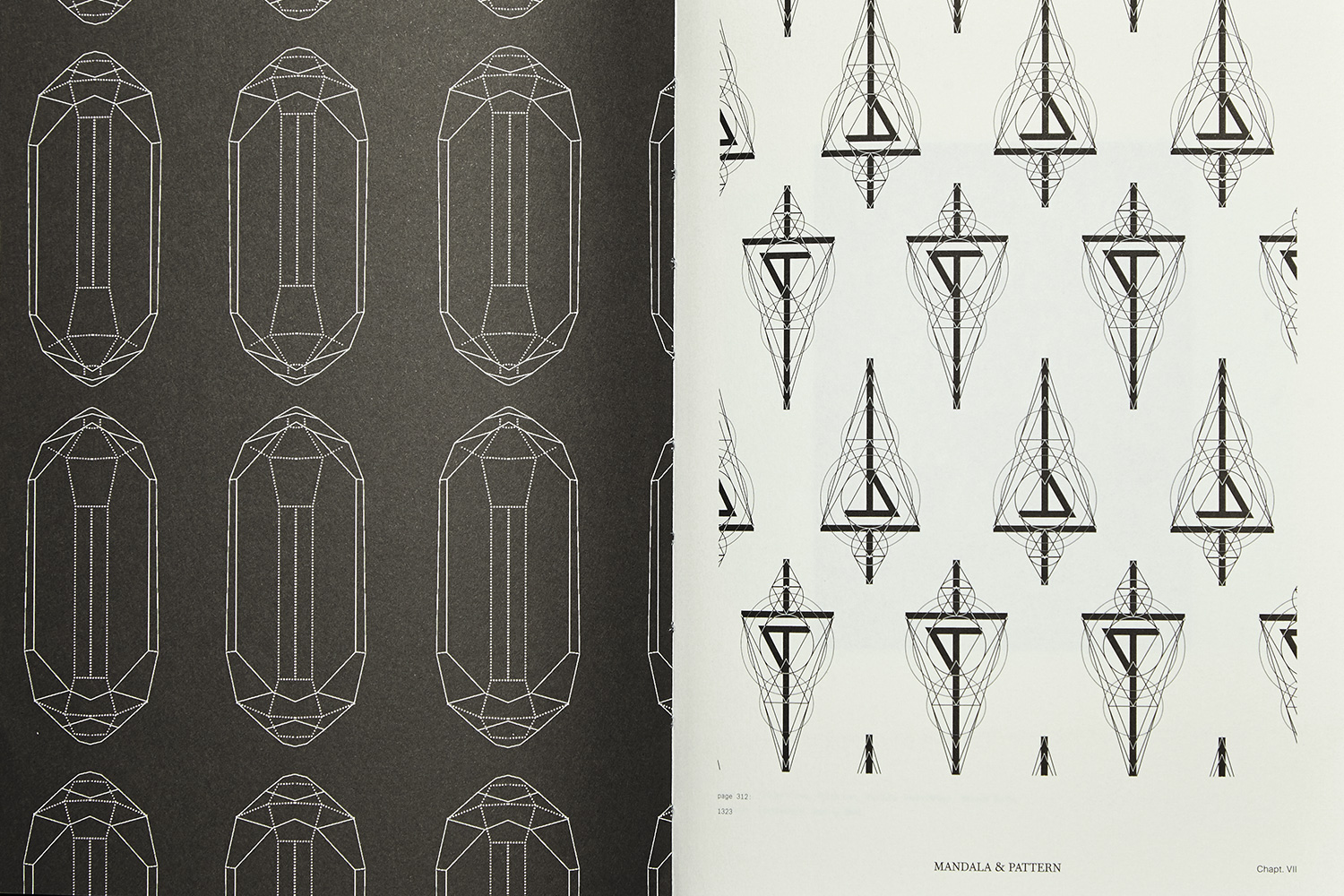
    The Enigma of  Myoshka, is as equally revered as he is renowned within both the tattoo and art world alike. Inspiring a generation of practitioners, as well as collaborating with the likes of Thomas Hooper, Tomas Tomas and Xed Le Head, he has earned his name as a Geometrical genius: capable of  boggling the mind and altering planes of vision through tesselative drawings, designs and Gif Files. Hundreds of dedicated followers of his complex style  have shown permanent appreciation through both tattooing and scarring alike, allowing this realm of adornment to constantly have its boundaries tested and pushed forwards. 


    SB: How would you define Myoshka?

    M: Myoshka is me now. It started off when I was designing stuff and there was a collective of us working. The name was created then with a creative partner of mine at the time. It came from the word Matryoshka; so it was taking about ideas from ideas and a combination of things making the complete entity. Post rationale, I liked it because it was Japanese (laughs). I’ve gone through various transitions from working as an art director, to working as a designer to then doing some freelancing. I’ve been doing advertising for 15 years, but that’s what taught me all the stuff which means I can do the art. At times there’s a little bit of hidden meaning in my work but other times is simply for aesthetic.  At the moment, for me Myoshka is the Geometry. I never use my real name; not sure what that says about me. People don’t really know what I am or what I do: I like that.


    SB: So how did you discover Geometry? Was it through your day job, or through the likes of tattooing?

    M: I actually discovered it through Tomas; I knew about Geometry and had been designing before, but not in those ways. As soon as I saw his work, I was just drawn to it. There was just an energy between us and we started sharing stuff. It wasn’t a case of him sitting me down and telling me how to do things, it more me doing it on my own and then us catching up. The blog(s) started and we starting sharing things through that. He’s still a big inspiration for me now. Through that I met Xed and it really opened up for me.


    SB: Would you say your life revolves around your art?

    M: Yeah!  If I’m not doing my day job, I’m doing this stuff: that’s how the Maharishi thing has come about. I’ve met some nice people along the way, like the blog said. A lot of them I’m proud to call friends; I wouldn’t have met Xed if it wasn’t for that, Matt Black… Jondix, even Thomas Hooper. Even though we haven’t met in person, I still feel as if we’re part of the same family. Tattooing is one of those things where it works in a similar way that I do in that it isn’t a job, its the tattooer’s life. So I’ve kind of drawn parallels in that respect.


    SB: So what is the creative process like in constructing such complex patterns?

    M: It can be any number of ways of working. Sometimes I see old patterns I like that I want to recreate, learn from and then create something new from that. Other times….it depends what mood I’m in. All of the patterns already exist in so many different ways, I just connect the dots. Some nights I’ll work and get nothing done. Other nights, I’ll just keep going or I’ll start something and 6 months later or 8 months later I’ll open that file again and I can see what it was, or what I was starting to get at.


    SB: How far back does Tattooing go, within your life?

    M: I think my earliest memory of tattoos was when I used to swim in my early teens: I used to train a lot. Every Friday we used to have to share the pool with the public, and there was this old boy and he would come with his full bodysuit and I just thought it was incredible. I thought the concept of it was amazing- Old School, sailor style tattoos- very, very heavy work. After that, it was when I was swimming for the England team, and was ill. They didn’t want me to infect the rest of the team so I had to sit on my own on the plane back to England. This guy turned up; tattoo artist and really crazy character. He was covered; I think they both planted the seed in my mind…


    SB: Lets talk about the work you have on your arms; are some of them your own patterns?

    M: I couldn’t be as so bold to suggest so (laughs). Its all geometry that already exists; its mainly a mix of Islamic and Japanese work. I got my first tattoo when I was around 15/16; Japanese Kanji, so I stuck with a theme there. Then I got this fella here, from the Soloman Islands… I think they were a few years apart…


    SB: Interesting evolution; did Tomas (Tomas) do all of the more recent work?

    M: Yeah Tomas has done most of the dotwork; we’re working on my front at the moment, which is one of my designs. Tomas and I learnt a lot during it; I’m still interested in the way that Tattooing works and is applied to the body, and so I can understand more what is achievable to the skin via my patterns; still working in 3-D. I know I have my fun on Photoshop, but applying to skin is not simple in any way. When we started it was a case of saying that we can get this pattern just to wrap, but once I started understanding that the arm isn’t completely cylindrical, then I began to fully understand the complexities. Xed and Tomas are the masters who are cracking this sort of stuff; they’re masters and they’ve dedicated their lives to it.


    SB: With this style of tattooing as well as tattooing in general gaining such a larger social awareness, are you happy to see such a progression?

    M: Yes; I mean tattooing for me is a very personal thing anyway but I think that its good overall that  its growing: its another art form. But me being me, if everyone was getting tattooed I’m not sure if I would be so attracted to it . It still has a very different reaction socially, depending on where you are.  Rarely do I leave the city, so I don’t get such negative reactions. If I was to go back to Singapore, where my mums from I know her family would have a very different view and it wouldn’t be as acceptable.


    SB: I’m always interested when people dedicate their whole body to a specific style. For instance those who have full Geometric bodysuits, but have no attraction to figurative tattoos, script etc. How was it in your case particularly? 

    M: For me, this was the work I was attracted to and it’s about the relationship between me and the artist. It’s the art that spoke to me. I remember going through the flash book for my second tattoo, and then bang!- this one from the Soloman Islands hit me; it spoke to me and that’s what I ended up getting, but I had no idea what it was or what it meant. Years later in Amsterdam, a guy in an art shop, fully tattooed, asked me if I knew where my tattoo came from. When I said no, he scurried out the back of the shop and he came back with a big book and said to me that it was what the ancestors used to carve into the paddles, from the Solomon Islands- which was weird for me as my Granddad was from there. I did my selections differently in the beginning, but I changed how I approached tattooing as time went on. For my back I just said to Tas I wanted a dragon, and just let him rip. With Tomas with the last couple of pieces, we’ve been working more collaboratively and we’re learning along the way which is good fun.


    SB: Seems like a great co-existence of styles.  I came across one of Iestyn (Flye’s) latest clients who had one of your designs scarred on his face; what was it like to see your work like that?  

    M: The pattern that got cut into that guys face’ is one I’ve loved for ages, but never been able to get it right and then suddenly a few month ago I opened up the file again and got it!  I just have the biggest amount of respect for things like that. I didn’t see it being done; I wish he had kept the skin, that could have been my next art project (laughs). Iestyn has done a few of my patterns; a guys hand, face- those are my favourites.


    SB: What creative background did you come from, before you began your journey with Tessellations and Geometry?

    M: Well I didn’t go to university; I did a B-tec in Media and got my work experience at a Graphic Design company where after two weeks, they gave me a job, which I turned down because I needed to finish my course, but began working there in my free periods. I did 18 months with them after I finished. I then applied for Central St Martins, but didn’t get it in the end- I was absolutely gutted. After doing flyers and youth orientated work for nearly two years, I decided that I’d try something  a bit more corporate, so I went into more grown up Graphic Design companies. While I was there, I taught myself Flash and built a portfolio in it, and I then settled in London and worked up to an Art-Direction level but at that point I realised that digital was all great, but really it was motion graphics which was the next big thing. Not a lot of people could see that then though.  


    SB: How significant is dot-work within your art?

    M: Well Dotwork is something that I discovered through Tomas’ work and was something he was using to express himself, which I and other practitioners have adopted over time. For me its about the life and the energy, its about that balance of negative and positive: I don’t like it when its too dense, I like it to breathe and for it to have this life.


    SB: What do you have planned for the rest of 2012?

    M: Well I have the screen prints, so hopefully by June I will have 23 ready for an exhibition, which should be at the Maharishi store- alongside the clothing, and the collaborative work with the brand. I started a project with Tas, which the Tibetan skulls. Tas has kind of done flash for it, then I’m going to render my illustrative version of it, and then we will screen-print those and then Tas will paint the backgrounds. It should be a good year

    www.myoshka.jp


  7. Cris Cleen

    April 11, 2012
    by Admin
    Working from Brooklyn’s Esteemed Saved Tattoo, Cris Cleen demonstrates a style in his art and tattooing, full of nature, narratives and eroticism, within an array of contexts and approaches. Aided by uses of anthropomorphism, pensivity and a romantic glance at the seemingly forgotten past of the western world, he is able to create with ease beautiful glimpses of a by-gone age,  firmly preserved within his mind. Elegance and  Simplicity are at home within his style; not to mention  a passion and dedication to his practice, unmatched by many and scarce within modern tattooing.


    1) Why is it important for you to explore male sexuality as well as female?

    ‘Cause I love the narrative of unrequited love and longing. Being vulnerable to the female element, so you have to expose yourself a bit or a lot! Most agree that the female form is artistic and an object of desire but not as much the male. Unless you’re a homosexual artist, people often see the penis in art as a juvenile stage of drawing that you dont do as an adult. The relation between the men and women in the work is more important than just putting the female body on display. I dont want it to be a study of anatomy


    2) Why is the trio of black, red and white ink/paints so prevalent within your work?

    I also use a blueish grey that seems to translate more as black in the photos I suppose. That is my favorite color but of course never gets noticed: it reminds me of a uniform color. so I use it uniformly. I like high contrast so that if it was filtered through squinting eyes , that you could still tell what it is. Plus with more drastic tones , each color holds up the other, making them all necessary.

    3) What do you love the most about the turn of the (20th) century?


    In the art sense, I like that similar to tattooing , suggestive art was a rebellion and deemed despicable. I like that artist might be prosecuted for their works.


    4) What is the best thing about being an artist in Brooklyn?


    I wanted to live in New York and specifically be at Saved to have a platform that would put out the work and raise the level of art I could get away with doing. I could try a lot of ideas and see how they resonate very quickly and also people being more open to new things like that. New York is the center of the world for the art that im interested in. It’s often suspect but never the less, open to anything. What more could I ask for?


    5) What piece of literature would you say has inspired you the most?


    Well, I wish I read more than I do which I can admit is very little but of course, Marques DE Sade. Also Leonard Michaels, but, I’m more into film so that has much more of an influence on me.  Seeing the expressions with what is being said: I like that, as there isnt as much interpreting. The film draws the space and landscape it wants you to see. I know those who read hate that but I think its a more developed idea. You just dont get to change it for your own ideals. Which I like in art in general.


    6) Why are snakes in particular, so re-occuring in your work?


    They represent so much but most obviously, sexy and scary at the same time. More-so than any other image; the context can change around it but not the snake, which is so powerful. I wish I did more snakes.


    7) When you aren’t tattooing or creating art, you are_______?


    I don’t do anything besides work on tattoos and art. If you’re going to do it, you have to do it all the time. It’s too un-forgiving to be a hobby. We get covered in tattoos to constantly commit ourselves to this world; to live a certain way. I cant say I dont wonder what it would be like to be a different person or what kind of man I would be if I hadnt spent my whole adult life involved in tattooing, but im a slave to it.


    8) What is so powerful in the relationship between narrative, voyeurism & sexual expression ?


    There is nothing else.  I think a lot of it is lost now in the current tattoo world and art in general. Everyone wants to make money, so they make what sells to people, sells to their kitchen and living room, not their desire. I got into more erotic ideas in art through the suggestive nature of western tattooing. The designs that were made to tickle the insides, arouse the heart and libido and not congratulate self affirmations like you see so much now. If I can make one stamp on this , it would be to remind people to get work on their bodies that satisfies the most decadent  of your true nature. Before you see me, forget your morals. Save it for your priest.


    9) Who were you last tattooed by?


    I think it was Anderson here that did a not very custom job as a favour. The stigmata of the Buffalo Bill character  from Silence of the Lambs. An incredible character who’s complete body dysmorphia has pulled his insides outward in hopes of becoming a worshiping  female Goddess…


    10) What is one thing every Gentleman should remember?


    Treat yourself like a Gentlemen and others will too…eventually .